


14 Free Low-Income Savings Challenges (Printable PDF)
Melanie DeJong • 31 October 2026
Savings challenges built for a one-income budget
If you've ever printed a savings challenge, gotten to week 12, and realized you'd need to find $12 this week and $13 the next with nothing left after groceries, this post is for you.
Hi, I'm Mel. We're a family of six living on one income. I'm home with our four kids, we homeschool, and my husband works a full-time job while building our house himself, from the ground up. Before I came home, I was a CPA. So I know the math of saving. I also know what it feels like when the math says "save more" and the checking account says "with what?"
Most savings challenges online are built for a second income that isn't there. The ones below aren't.
Every challenge here starts small, has an honest total, and works for a family where every dollar already has a job.
Inside this post:
- 14 low-income savings challenges, from $30 to $500
- Where the money actually comes from when you're on one income
- A free printable PDF pack with a tracker for every challenge
Why most savings challenges don't work on a low income
Most savings challenges don't work because they're unrealistic for your specific situation.
I know because I've quit them. I've started challenges with goals that were just too lofty for us. They looked great on paper, but they didn't work with our income, and quitting left me feeling worse than before I started.
The problem isn't that you're bad at saving. The problem is that these challenges get harder every week, right when motivation runs out. On a tight budget, one hard week means quitting, and quitting feels like failing.
The challenges below fix that in three ways:
- Small, flat amounts. Most deposits are $1 to $10, and they don't climb.
- Short timelines. Two weeks to three months, so you get a win quickly.
- Money you already have. Several challenges use money you're already spending or receiving, not new money you have to find.
(If you love the envelope method, I wrote about the full 100 envelope challenge too. Just know what you're signing up for.)
Before you start: three ground rules
- Give the money a job before you save it. A challenge with a purpose gets finished. If you don't have $1,000 set aside yet, make that the job: a starter emergency fund is the first step my husband and I took when we started following Dave Ramsey's plan as newlyweds. Already have it? Pick one upcoming expense, like Christmas, car registration, or homeschool curriculum, and turn it into a sinking fund.
- Move it out of checking. My CPA brain insists on this one. Money that sits in checking gets spent, every single time. Open a free high-yield savings account or use a cash envelope that lives somewhere you won't grab it on a grocery run.
- Pick one challenge, not five. It's tempting to print them all. Don't. Finish one, celebrate, then pick the next.
One honest note: if you're behind on rent, utilities, or groceries right now, take care of those first. Food, shelter, utilities, and transportation always come before savings. A savings challenge should take pressure off, never add it.
14 low-income savings challenges (with free printables)
Challenges 1 to 10 are flexible: small amounts, short timelines, and some use money you're already spending. Challenges 11 to 14 are 30-day plans with a set deposit for every day, for when you want someone to just tell you what to save. Totals marked "varies" depend on your family.
| # | Challenge | Total saved | Time | Biggest single deposit |
|---|---|---|---|---|
| 1 | 30-day dollar challenge | $30 | 1 month | $1 |
| 2 | $5 Friday challenge | $60 | 12 weeks | $5 |
| 3 | $100 mini challenge | $100 | 6 to 8 weeks | $10 |
| 4 | Christmas cushion challenge | $100 | 8 weeks | $20 |
| 5 | Spare change challenge | Varies | Ongoing | A few dollars |
| 6 | Found money challenge | Varies | Ongoing | Varies |
| 7 | No-spend weekend challenge | Varies | 4 weekends | Varies |
| 8 | Pantry challenge | Varies | 1 to 2 weeks | Varies |
| 9 | Mini envelope challenge | $325 | About 10 weeks | $25 |
| 10 | $500 paycheck challenge | $500 | About 1 year | $20 |
| 11 | $100 tiny budget challenge | $100 | 30 days | $5 |
| 12 | $150 low-income challenge | $150 | 30 days | $8 |
| 13 | $220 paycheck to paycheck challenge | $220 | 30 days | $11 |
| 14 | $350 one-income family challenge | $350 | 30 days | $18 |
Not sure which to pick? Start here:
- You've quit savings challenges before: #1, the 30-day dollar challenge. One dollar a day, nothing more.
- Your income changes week to week: #3, the $100 mini. You choose a $1, $2, $5, or $10 piggy each time.
- You want a set plan with a finish line: #11 or #12. Every day's amount is decided for you.
- You live paycheck to paycheck: #13 or #10. Both are built around paydays.
- Christmas is coming: #4, started the first week of November.
- You can't find a single extra dollar this month:#6 or #8. They use money you already have.
1. The 30-day dollar challenge ($30)
Save $1 every day for one month. That's it. Color in a box each day.
Thirty dollars won't change your life. Thirty days in a row of choosing to save might. This is the one I'd start with if you've tried challenges before and quit. It also works as a simple low-income monthly savings challenge you can repeat every month.
2. The $5 Friday challenge ($60)
Every Friday for 12 weeks, move $5 into savings. Same amount, same day, no climbing.
Tip: Set up an automatic $5 transfer for Friday so you don't have to remember.
3. The $100 mini challenge ($100)
The tracker has 30 piggy banks: ten $1 pigs, ten $2 pigs, six $5 pigs, and four $10 pigs. Each time you set money aside, color in a piggy that matches. When the grid is full, you've saved $100.
Why this one works: you pick the amount. Tight week? Color a $1 piggy. Got a small refund? Knock out a $10. You're never stuck owing a big amount on a hard week.
4. The Christmas cushion challenge ($100)
Eight weeks before Christmas, save $5, $5, $10, $10, $15, $15, $20, $20. That's $100 by Christmas, without a credit card.
Start it the first week of November and you'll finish right on time. Here's what Christmas looks like for our family of six: each child gets something they want, something they need, and something to read, and we spend $100 per child, total. Stockings are simple (candy, gum, socks, pajamas, stickers, little rings for the girls), everyone opens a book on Christmas Eve, and the kids share one "together" gift. This year it's Lincoln Logs.
5. The spare change challenge (varies)
This is paragraph text. Click it or hit the Manage Text button to change the font, color, size, format, and more. To set up site-wide paragraph and title styles, go to Site Theme.
6. The found money challenge (varies)
Any money that wasn't in your budget goes straight to savings: a store refund, a cash-back reward, a rebate, birthday money for you, or the $15 you got for the outgrown kids' clothes you sold on Facebook Marketplace.
With four kids, outgrown clothes, gear, and toys are a steady source of found money in our house. In our DIY house-building season, my favorite found money is a project coming in under budget. The build is paid from a separate fund, so that money stays put for the next phase.
Keeping these funds separate is a safe-guard we set up to ensure we're not spending our building funds on personal/family budget expenses. It can be tempting to blur the lines. Especially when I really want something.
In the same way, it's important to separate the money in your checking account out into categories to ensure you're spending your money according to your priorities, and with a clear plan.
7. The no-spend weekend challenge (varies)
Pick four weekends. On each one, spend nothing beyond what's already in the budget: no drive-thru, no Target run, no "quick trip" for one thing. On Monday, move what you'd normally spend on a weekend into savings.
A no-spend weekend doesn't mean cutting what matters. We budget about $300 a month for restaurants, which might sound like a lot for one income, but date nights, birthday dinners, and meals when family's in town are a priority for us, so we keep them. And drive-thru coffee is my treat during this build season. A no-spend weekend just skips the extras that aren't priorities: the impulse store runs and "we're out, let's just grab something."
This might seem impossible for sports families that are always on the go and traveling. Get creative. Instead of completely skipping the drive-thru, find ways to make it cheaper. Or pick one thing- get your meals out, but skip the drive-thru coffee.
If you know my husband and I, we'd pack PL&J sandwiches for lunch before we skipped our drive-thru coffee!
8. The pantry challenge (varies)
For one or two weeks, eat from what's already in your pantry and freezer. Only buy milk, eggs, and fresh produce. Whatever you'd normally spend on groceries minus what you actually spent goes to savings.
For a big family, this one adds up fast because the grocery budget is usually the biggest flexible line. I know groceries are insanely expensive for large families, but I've found it also is the easiest category to manipulate. I'll cook a whole chicken and make it into 2-3 meals.
We do pantry weeks more often now that I've stopped buying everything organic, and we have one leftovers night every week, too (sometimes even 2-3 nights per week).
In the past. this would've made me feel like a failure. But I've realized that it's not so much what I eat (although that matters), but how I eat it. With thanksgiving or with murmuring.
We give thanks as a family over a Christmas ham and over a variation of chicken, broccoli, and rice we've had every night that week.
9. The mini envelope challenge ($325)
The 100 envelope challenge, cut down to size. The full version totals $5,050. This one totals $325. Number 25 envelopes from $1 to $25. Shuffle them, pull two or three a week, and fill them. In about 10 weeks you'll have $325.
This is the "level up" challenge for after you've finished one or two of the smaller ones.
When we first started budgeting, I used cash envelopes for everything. Now that we can use Apple Pay we have convenience, but not without a cost (no pun intended). Research shows over and over that when we use digital forms of payment, we spend more. It doesn't activate the same reflectors in our brain.
Just how much? About 10% more, according to a recent study!
I'm not going to tell you to use cash envelopes, but if you want to really change your habits at their core (by rewiring your brain) consider it!
10. The $500 paycheck challenge ($500)
Save $20 from every biweekly paycheck for 25 paychecks. That's $500 in about a year.
Paid weekly? Save $10 a week for 50 weeks. Paid monthly? Save $42 a month for 12 months (that's $504).
This challenge works best when it's part of your paycheck plan, not an afterthought. Here's how I budget by paycheck, so the $20 comes out first instead of whatever's left at the end.
4 thirty-day challenges for when you want a set plan
Some months you don't want to decide anything. You just want a plan. These four tell you exactly what to save each day. Every one follows the same simple pattern: a small amount for days 1 to 10, a little more for days 11 to 20, and the most for days 21 to 30, once the habit is built.
11. The $100 tiny budget challenge ($100)
| Days | Save each day | Total by end |
|---|---|---|
| 1-10 | $2 | $20 |
| 11-20 | $3 | $50 |
| 21-30 | $5 | $100 |
This is the smallest 30-day plan in the post. If $2 a day is all you've got right now, start here. That's the price of one drive-thru drink, and by day 30 you'll have $100 sitting in savings that wasn't there last month.
12. The $150 low-income challenge ($150)
It starts at the same $2 as the tiny budget challenge, then steps up faster. By day 21 you're saving $8 a day, and after 20 days of practice, that's a lot easier than it sounds.
| Days | Save each day | Total by end |
|---|---|---|
| 1-10 | $2 | $20 |
| 11-20 | $5 | $70 |
| 21-30 | $8 | $150 |
13. The $220 paycheck to paycheck challenge ($220)
Tip: Daily deposits are hard when money only comes in every two weeks. Instead, move the whole next stretch at once on payday. For example, transfer $40 on payday for days 1 to 10, then color in a bill each day.
| Days | Save each day | Total by end |
|---|---|---|
| 1-10 | $4 | $40 |
| 11-20 | $7 | $110 |
| 21-30 | $11 | $220 |
14. The $350 one-income family challenge ($350)
This is the biggest challenge in the post, and it's for a month when you have a little breathing room. Because we budget every dollar before the month begins, I'd plan this one in at the start of the month as its own line, not hope to find $18 a day at the end.
| Days | Save each day | Total by end |
|---|---|---|
| 1-10 | $7 | $70 |
| 11-20 | $10 | $170 |
| 21-30 | $18 | $350 |
Where the money actually comes from on one income
The honest answer: not from a side hustle. You don't need to start a business from your kitchen table to save $100. On one income, savings come from three places.
1. Money you're already spending. Look at last month's bank statement with a highlighter. Most families find at least one of these:
- A subscription nobody uses (streaming, apps, a box you forgot about)
- A phone plan you could switch to a cheaper carrier
- Car or home insurance you haven't shopped around in years
- Grocery money lost to "just one thing" store runs
Cancel one $15 subscription and in four months you've saved $60, the full $5 Friday challenge, without changing anything else.
2. Money that comes in once in a while. Tax refunds, birthday money, rebates, and anything you sell. Decide ahead of time that a set share of it goes to savings, before it hits the account and disappears. (CPA note: if you get a big refund every year, part of it is money you could be saving all year instead. It may be worth adjusting your withholding with a tax professional.)
3. Money you plan for first. This is the big one. If savings is whatever's left at the end of the month, there will never be anything left. When you budget by paycheck, savings gets its own line on every paycheck, right after the bills. Even $10 counts. It's the same habit that got us out of student loan debt as newlyweds: we still budget every single dollar before the month begins, and we still don't carry any debt besides our mortgage.
When we went to one income, the hardest part wasn't one big sacrifice. It was having to pay attention to every single dollar. There wasn't much left to save, and some months it honestly felt like we were going backwards. But we trusted the Lord's provision, and He has been faithful.
Small amounts still matter
When money is tight, it's easy to believe that saving is for people with more. But God isn't waiting for a bigger paycheck to see whether we'll be faithful with what He's given us. The $1 a day matters, not because $30 is a lot of money, but because it builds the habit that gets you to the bigger goals.
And when the challenge ends with $100 instead of $1,000? That's still $100 you didn't have. The next time the car needs a new tire, that's $100 that doesn't go on a credit card.
One mindset shift helped me most: money comes in seasons. When it's tight, you're forced to build the habits you'll be thankful for later, in a season of abundance. For us, coming home was a step of obedience. We believe Scripture calls a mother first to her home, and I wasn't doing able to prioritize my home while being the workforce. So even though it was a huge financial hit, we took that step and relied on the Lord for provision. He has been faithful, one small, budgeted dollar at a time.
Get the free low-income savings challenge printable PDF
I made a printable tracker for every challenge in this post, so you can stick one on the fridge and color it in as you go.
The free pack includes:
- 14 savings challenge trackers, one for each challenge above, including the 30-piggy $100 mini tracker and the 8-ornament Christmas cushion tracker. Every tracker also has a "color as you go" progress bar marked with real dollar milestones
- A "found money" log
- A blank tracker you can fill in with your own goal and amounts
All pages are free to download and print as many times as you like.
Start small, and start this week
You don't need a second income to start saving. You need one small challenge, one place to keep the money, and one week to begin.
If there's only $5 left over this month, save it anyway. It isn't about the $5. It's about developing the discipline now.
Pick the challenge that felt doable while you were reading, print the tracker, and color in your first space this week. Then come back and tell me in the comments which one you picked.
Read next:
- How to budget by paycheck, so savings comes out first
- What are sinking funds? Give your savings a job
- One-income family budget template
- Free printable money saving challenges
What is the best savings challenge for a low income?
Start with one that has small, flat deposits and a short timeline, like the 30-day dollar challenge ($30) or the $100 mini challenge. Finishing one small challenge builds the habit that makes the bigger ones possible.
How can I save money when I live paycheck to paycheck?
ay savings first, even if it's $5. Give it its own line in your paycheck budget, right after the bills, and move it out of checking the day you get paid. Then add "found money" like refunds and things you sell.
Is the 52-week savings challenge realistic on a low income?
For most one-income families, not as written. It totals $1,378 and asks for $52 in the final week. A flat version, like $5 a week, saves $260 in a year and stays the same every week.
Where should I keep my savings challenge money?
Somewhere you won't spend it by accident: a separate savings account, ideally a high-yield one, or a cash envelope kept out of your wallet.
Can kids do a savings challenge?
Yes. The spare change challenge is perfect for kids. Let them count and roll the coins, and pick a family goal together so they can watch it grow.

Share this post!
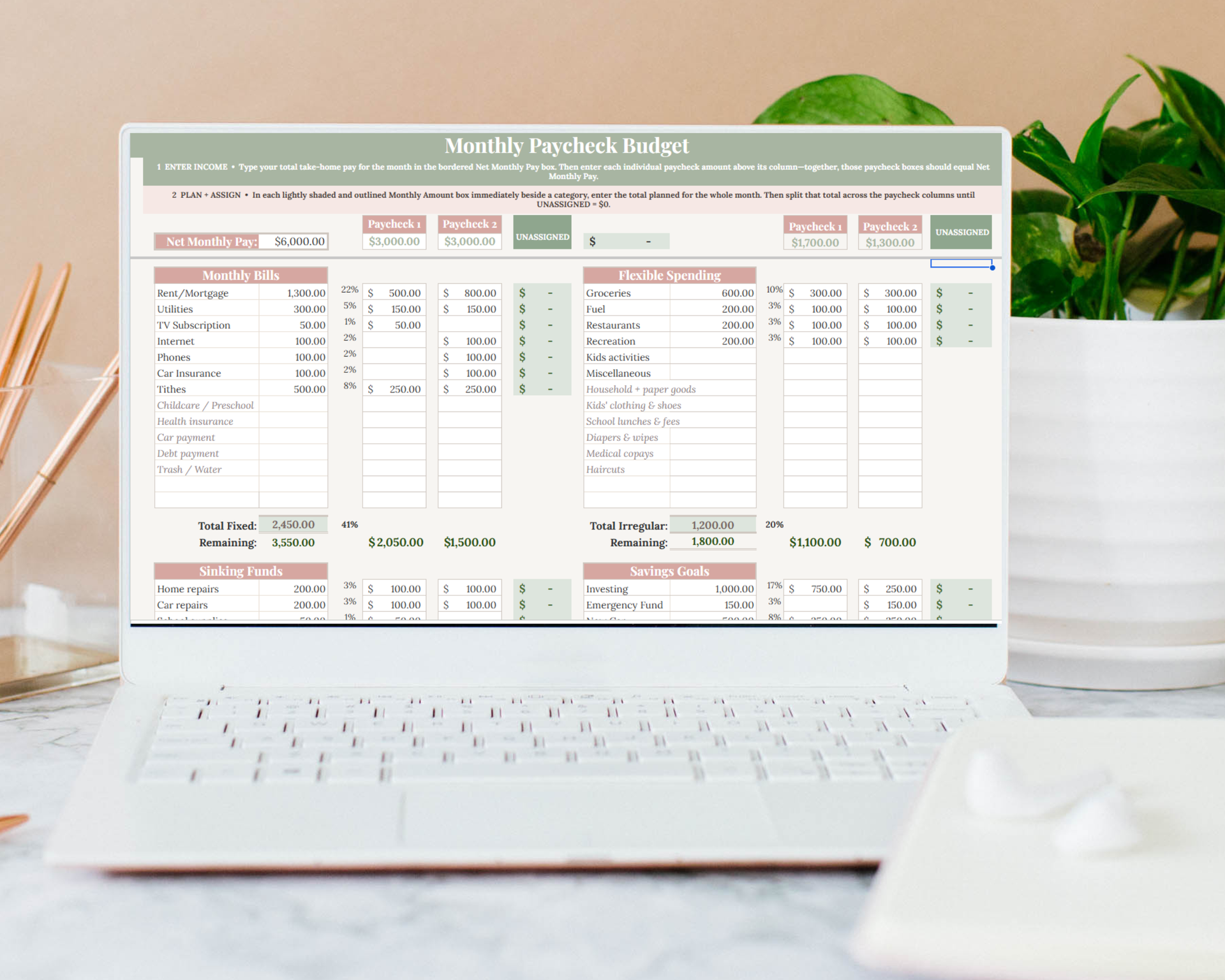
Step by step tutorial how to make a budget in excel or google sheets. Plus, get my free google sheets budget template that can be exported to excel in just a few clicks! Creating an excel budget will save you time and make budgeting a seamless process.

Learn how we budget on one income as a family of 6 using the paycheck budget method. See our simple system, categories, routine, and free budget template.

Building a house and homeschooling 4 kids? Here is how we afford a semi-organic, real-food diet on one income without burning out. Budget & grocery list included!
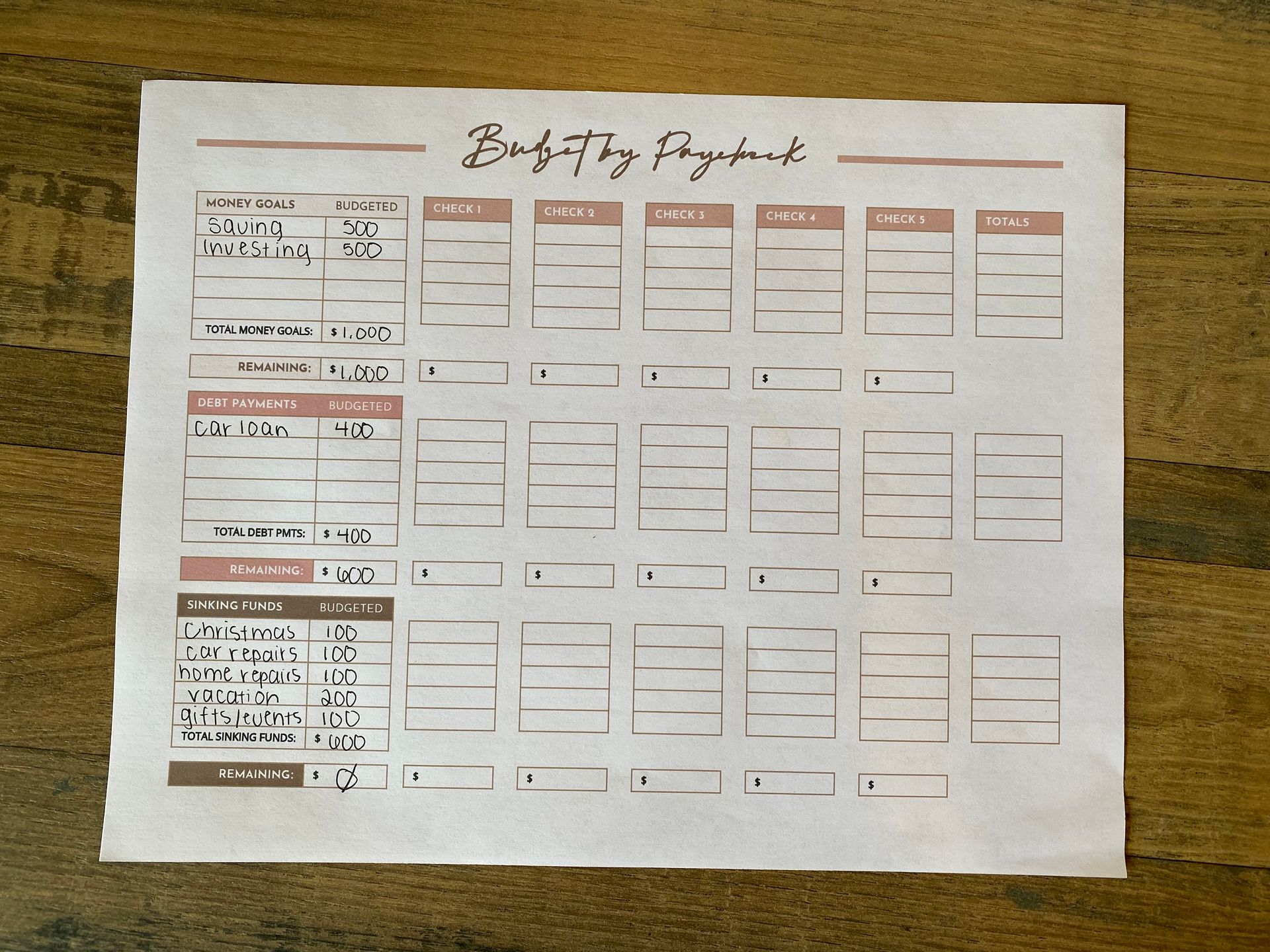
Learn how to budget biweekly paychecks on one income with a simple system that helps overwhelmed moms manage two paychecks a month with confidence.

Struggling to make one income stretch? This step-by-step paycheck budget method helps families stop living paycheck to paycheck and finally feel in control.

These budget notebook ideas will inspire your creativity and help you organize and reach your financial goals! Here's what you need in your budget binder to take control of your personal finances.
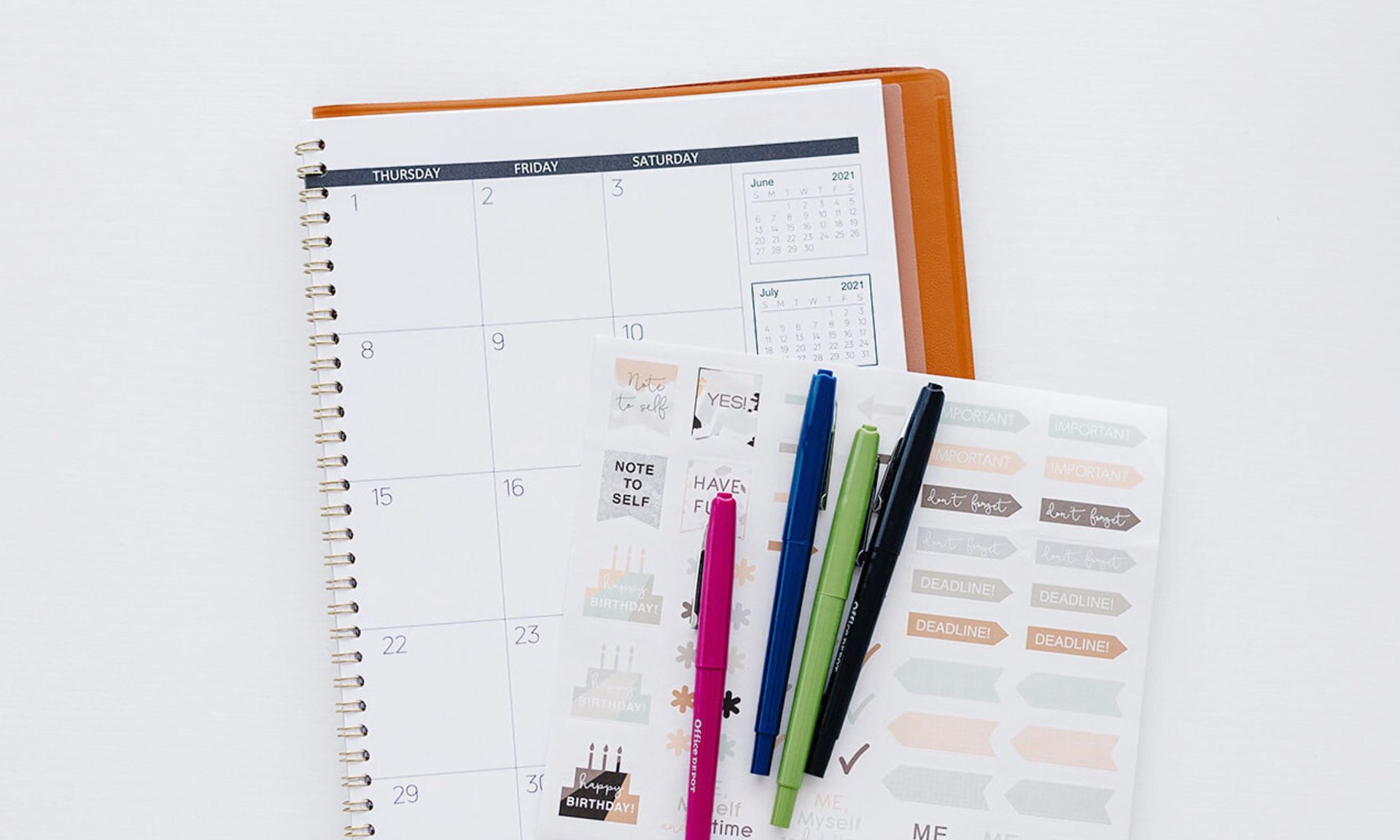
Organize your personal finances by utilizing a budget calendar- lay out your paychecks, bills, social events, etc., so you know exactly what you need to budget for in the month ahead!

Whether you have credit card debt, student loans, a car loan, or mortgage debt, use these debt free coloring pages as your debt payoff tracker; keeping you focused and motivated to become debt free!
