


How We Afford Organic Food for a Family of 6 (While Building a House on One Income)
Melanie DeJong • 11 May 2026
What is a realistic organic food budget for a large family? How do you switch over to eating organic, whole foods when you live on one-income?
The answer is not to do everything at once, and to not buy everything organic.
While this sounds counterintuitive, I've learned that being consumed by non-toxic living, which includes buying the purest most organic foods, often leads to poor financial decision-making.
It's understandable-- we want what's best for our family.
It's good to desire to feed them nourishing, whole foods.
Further more, the more you know -- about modern food production processes-- the more you desire to control your families food and environmental exposures.
But you can't control everything, and therein lies the problem.
Trying to control everything causes poor decision-making, fear, and anxiety that is more toxic than conventionally-raised, sprayed fruits and vegetables, financial mismanagement, and idolatry.
At least for me, the more I knew the deeper-seeded these sins became. I had to let go of food perfectionism.
So here's where I'm at.
This post will detail what I prioritize, where I buy, and a glimpse into our weekly meal routine trying to do the best I can with what the Lord has entrusted me with financially, energetically, and time-wise.
What Is a Realistic Grocery Budget for a Family of 6?
A realistic grocery budget for a family of 6 on one income typically ranges from $900 to $1,200 per month, depending on how much food is cooked at home, where you shop, and whether you prioritize organic or convenience foods.
Our Monthly Grocery Budget Breakdown: One-income Family of 6
In our home, we spend about $1,000 per month feeding our family of 6, which breaks down to roughly $250 per week.
I buy a combination of organic and conventional food, which is a major shift from the past few years where I primarily bought organic food and all non-toxic household items.
How to Keep Grocery Costs Low on One Income
1. Keep Meals Simple

Ok, here's the deal. Living on one-income with lots of littles, you need to prep recipes that have less ingredients. Seriously-- the less ingredients the better.
Keeping meals simple (like 3-5 ingredients simple) is a necessity right now.
But it's also taught me something-- that simpler is often better.
We've had some of our most delicious meals with just a few simple ingredients.
Most of the time, all food really needs is salt, pepper, and/or butter (or another fat).
I've learned that the key to flavorful food is not necessarily in the seasoning, but in the method of preparation. Certain ways of cooking certain foods will make them more or less tender and flavorful.
I've stopped scrolling Instagram and saving hundreds of recipes that require tons of ingredients or a lot of hands-on cooking time.
Now, I rotate the same meals and mainly use salt, pepper, and a fat.
2. Track Grocery Spending
One of the biggest ways we lowered our grocery budget was by consistently tracking where our money was going. This means I categorize every single transaction that comes out of our bank account.
It takes me maybe 30 minutes every week, split up into 5-10 minute blocks throughout the week. I can even track and categorize from my phone using the EveryDollar app.
Whenever I get behind on reconciling our budget, it never fails that I have spent more than I actually thought I did.
So if you're not tracking your spending at all, there's a high likelihood you're spending way more than your best guess.
You can't guess. Managing your finances and being intentional requires action. My husband goes to work everyday and earns money to provide for our family, and it's my job (alongside him) to make that money go as far as possible.
When I'm not strategically managing our finances, I'm being an unwise woman, as opposed to a prudent Proverbs 31 woman.
I have a simple Google Sheets budget you can download for free to start budgeting your paychecks and setting a grocery budget.
3. Avoid Packaged Snacks (Even Organic)
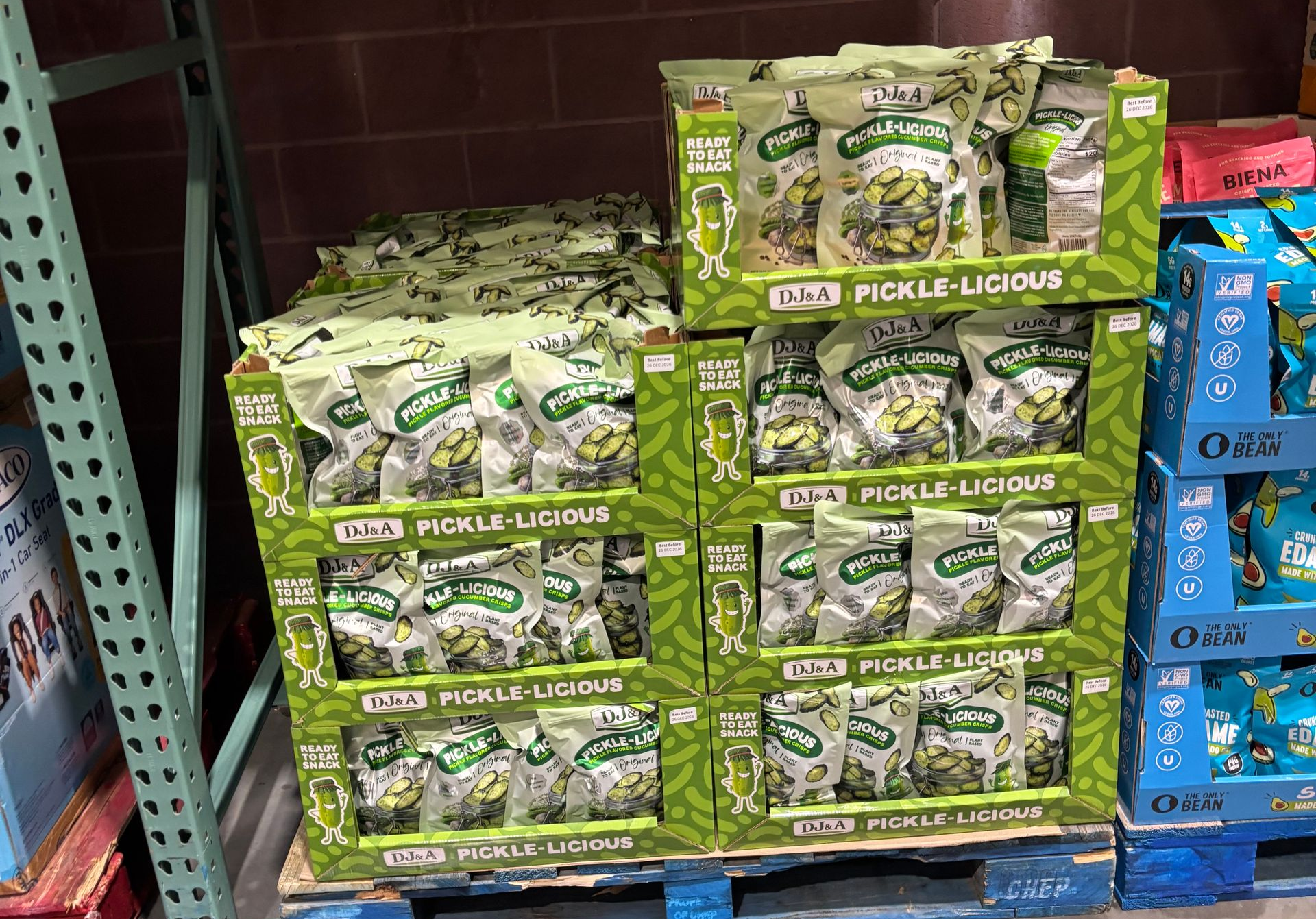
Anything in a package is going to cost double or triple, and I've learned my kids can just eat the real thing.
For example, instead of "pickle crips" (which I almost bought at Costco because they looked convenient), we can just have Bubbies bread and butter pickles (also sold at Costco).
Instead of dried fruit or organic fruit rollups, we can have frozen fruit.
Rather than snack cheese packages, I can just slice cheese off a whole block.
My kids are homeschooled and eat at home 99% of the time, so I save any packaged snacks I buy for special outings and occasions.
This way, they still get to enjoy the packaged snacks which they love, but I save it for special occasions.
4. Buy Bulk Organic Groceries from Azure Standard & Costco
Azure Standard has been one of the most practical ways we lower grocery costs while still prioritizing healthier, organic staples for our family.
For busy moms living on one income, buying fully organic at regular grocery stores can become overwhelming fast. Azure Standard offers a more affordable middle ground by allowing families to purchase bulk pantry staples, baking ingredients, grains, and natural household products at lower per-unit prices.
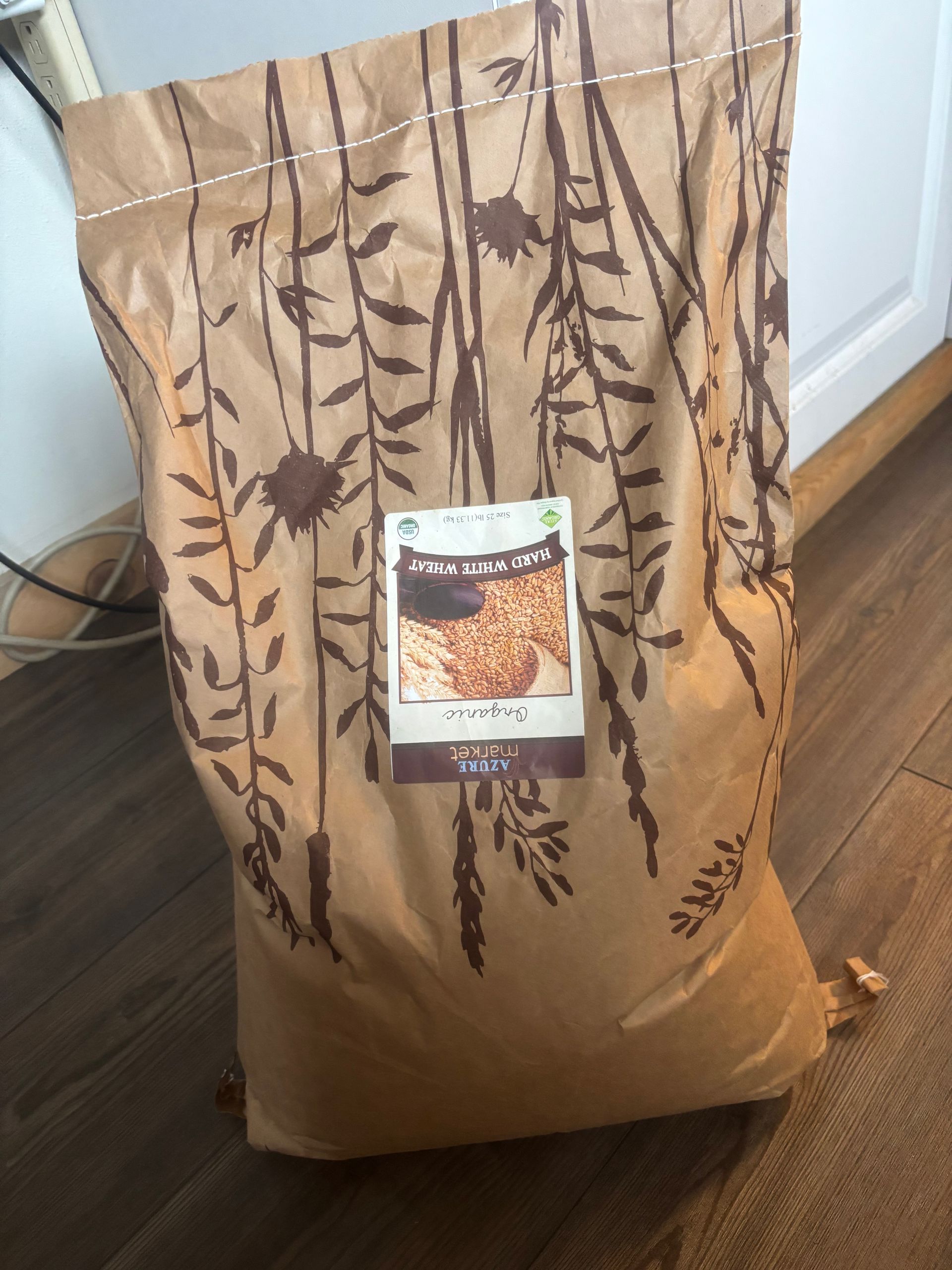
These are my most frequently ordered bulk items from Azure:
- Organic rolled oats (25 lb bag)
- Organic Jasmine rice
- Organic beets (25 lbs)
- Organic hard white wheat berries
- Organic soft white wheat berries
- Baking soda (aluminum-free)
- Dijon mustard
- Canned beans
- Extracts (for my homemade lattes)
- Bulk organic spices
- Frozen crinkle-cut french fries
- Organic apples
- Glass jars
I always check their sales page before placing my final order.
One of the best things (in my opinion) about Azure is that you can checkout once and then keep adding or removing items from your order without having to worry about checking out again.
It is sooo convenient as a mom!
Because Azure uses local community drop pickups instead of traditional shipping, prices are often lower than many health food stores.
Why it works well for our family:
- Lower long-term grocery costs
- Better ingredient quality
- Bulk savings
- Fewer impulse purchases
- Great for scratch cooking and meal prep
The tradeoff:
Azure does require planning ahead, storage space, and pickup coordination, so it works best as part of a broader grocery strategy rather than replacing every store trip.
For our family, Azure Standard helps us stock our pantry affordably while using Costco and local stores for fresh foods and weekly essentials.
5. Strategically Make From-Scratch
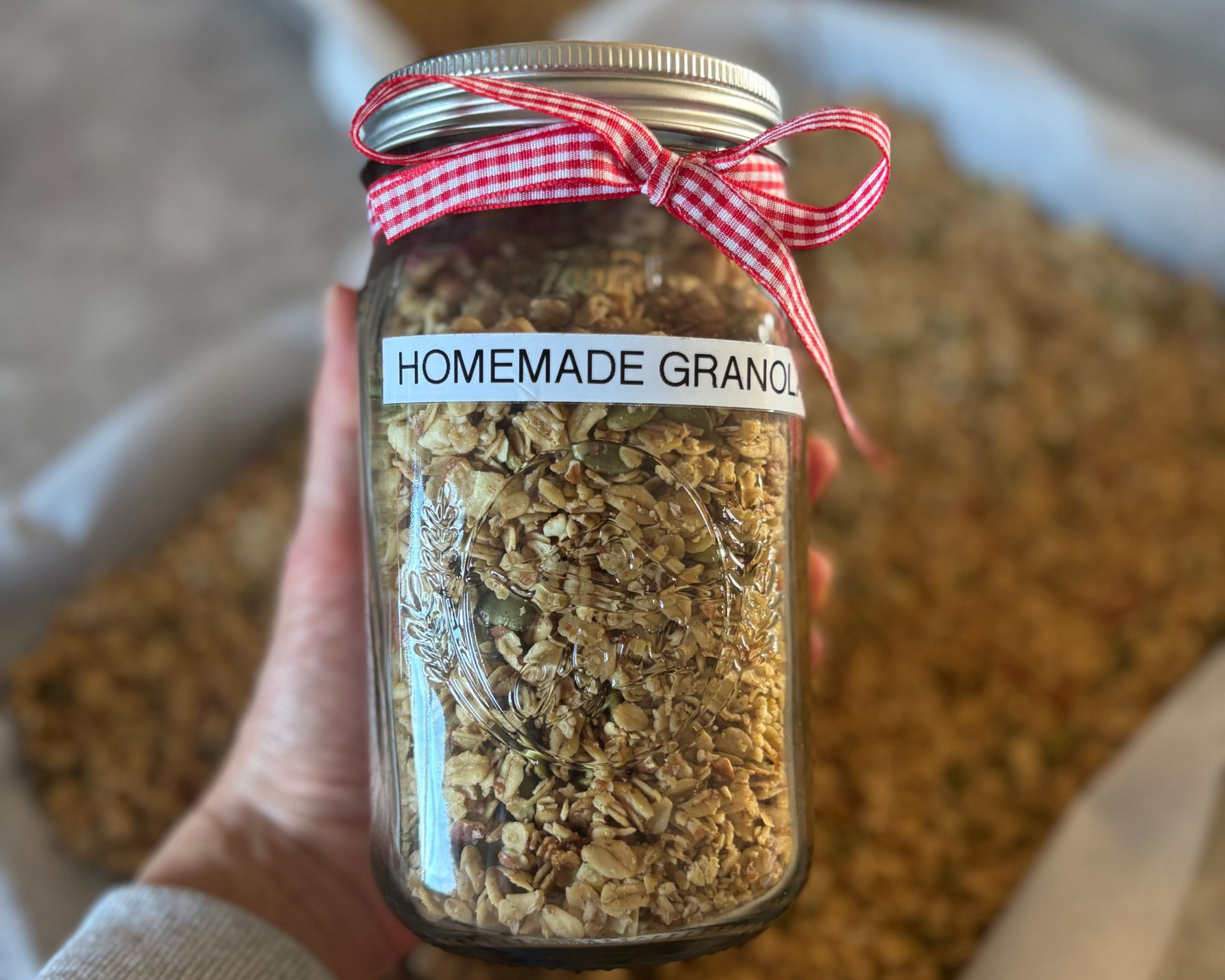
I'm in a season where I can't make a lot of things from scratch because of time constraints. Therefore, I have to be very strategic about what I do make.
My strategy is to focus on making from scratch expensive foods that require the least amount of time to make.
Foods I primarily make from-scratch in this season of life include:
- All main dishes in our meals (breakfast, lunch and dinner)
- Granola (SO easy)
- Pancakes
- Breakfast burritos
- Yeast bagels
- Baby food (I don't buy any pouches or jars from the store)
I'm not making homemade tortillas, bagels, or sourdough bread very frequently. These require much more time that I just don't have right now.
6. Focus on Practical Meal Prep that Works in Busy Seasons

Be realistic.
If there's one thing I've learned, it's that I always over-shoot what my capacity actually is.
We're building a house (DIY), homeschooling, and I'm home with four kids all day, ages 7 down to 10 months. I've had to lower my expectations of what I can realistically meal prep.
My strategy is to set a goal of prepping 1-2 things every week that will make my life easier at meal times.
Right now, here are things I'm prepping, as time allows:
- Breakfast burritos for my husband
- Greek yogurt pancakes for kids breakfast
- High protein bagels with fresh-milled flour
- Cooked veggies to grab for lunches
- Hard-boiled eggs and/or egg bites
- Quinoa and/or white rice
- Babies food (cooked sweet potatoes, carrots, pears, etc)
I don't prep all these in one week. I rotate them, and usually triple every recipe and freeze.
7. Balance Meals Using the Plate Method
While this is probably known to most people, when I first started cooking real, nourishing meals for my family, I had no idea how to pair foods together. I'm not kidding when I say I truly didn't understand that every meal should have protein, a veggie, and a carb.
So, if like me, you come to the table (no pun intended) with zero background in cooking, follow this framework for every meal:
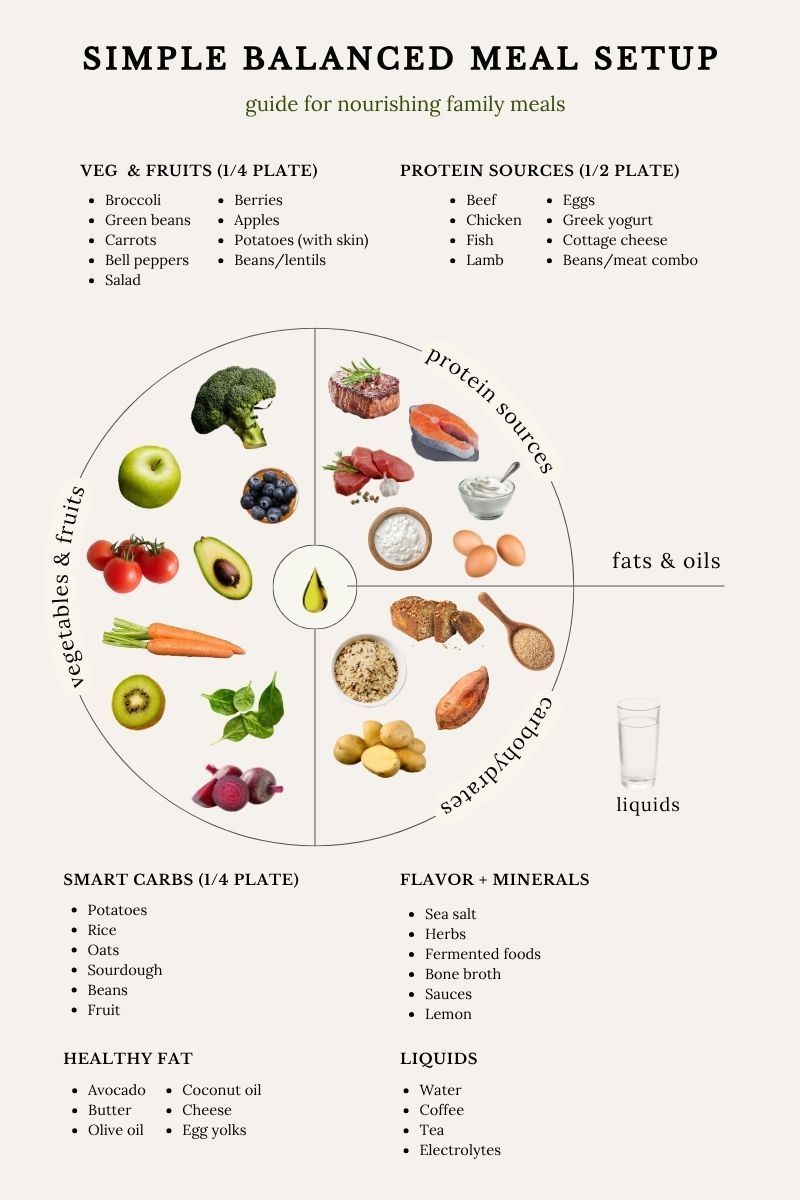
Protein + Fiber + Smart Carbs + Healthy Fat
Protein first. Fiber second. Carbs for energy. Fat for fullness.
Prioritize:
- Whole foods most of the time
- Protein at every meal
- Fiber daily
- Enough carbs for energy
- Healthy fats for hormones
- Regular meals (don't skip meals)
Examples (from my main meals):
- Taco bowls (with rice or potato)
- Meat + potato + veggie
- Soup + sourdough + salad
- Stir fry (with lots of veggies)
- Spaghetti (with veggies on side)
🍽️ Visual plate:
- 1/2 produce (1-2 cups),
- 1/4 protein (4-6 oz cooked)
- 1/4 carbs (fist-sized)
- 1-2 tbsp fat (thumb-sized)
Easy Large Family Meal Prep Recipes (Budget-Friendly)
I know we've been trained to think that more is always better, but it's simply not true.
I've found that less is more, especially when it comes to food preparation!
Salt and pepper goes a long way.
You don't need all the fancy fillers, at least not in this busy season.
So stop saving all kinds of recipes on Instagram that require 10-12 ingredients, with 5 of them being obscure ingredients you probably won't use again for a long time.

Share this post!
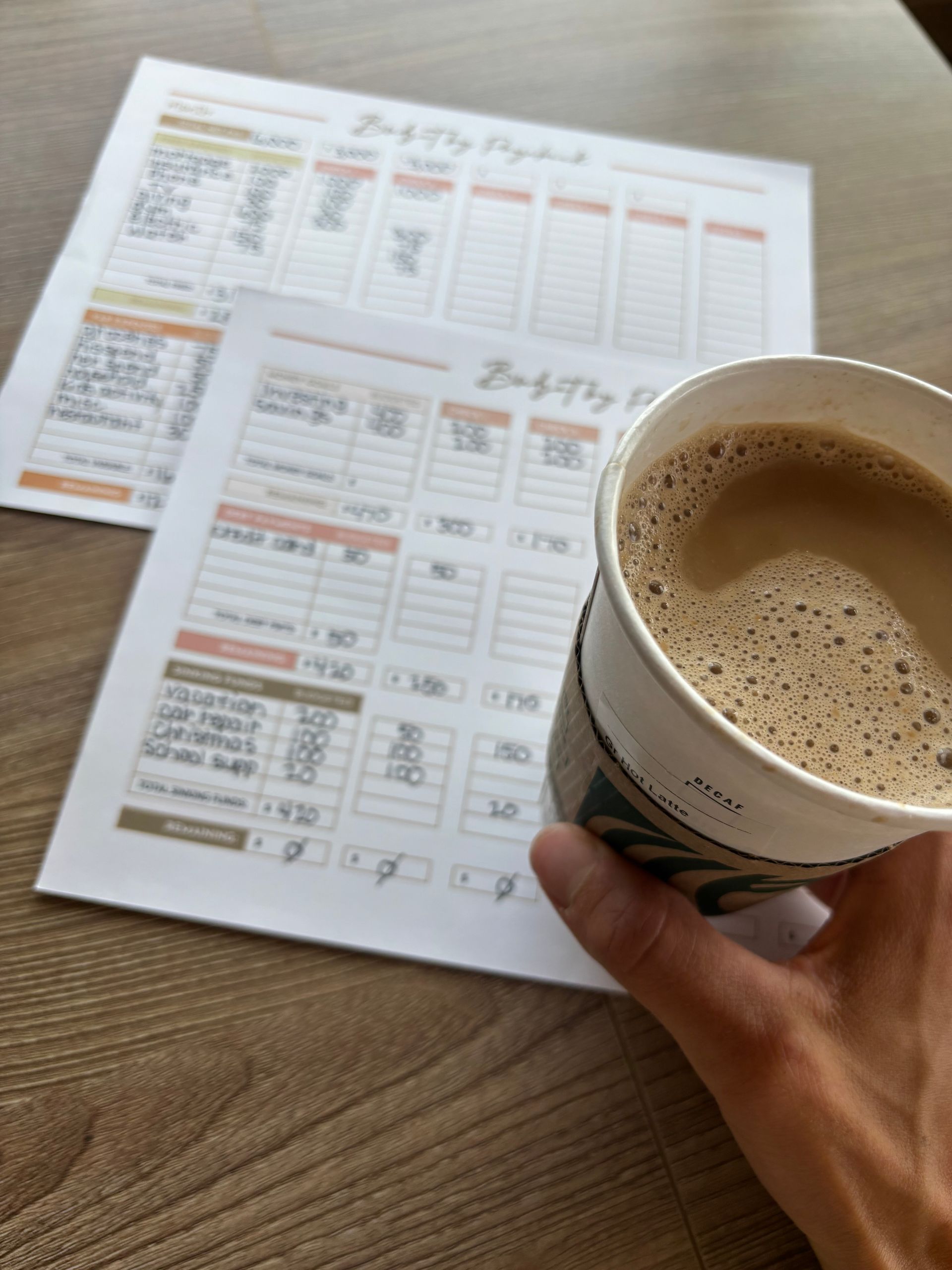
Learn how we budget on one income as a family of 6 using the paycheck budget method. See our simple system, categories, routine, and free budget template.
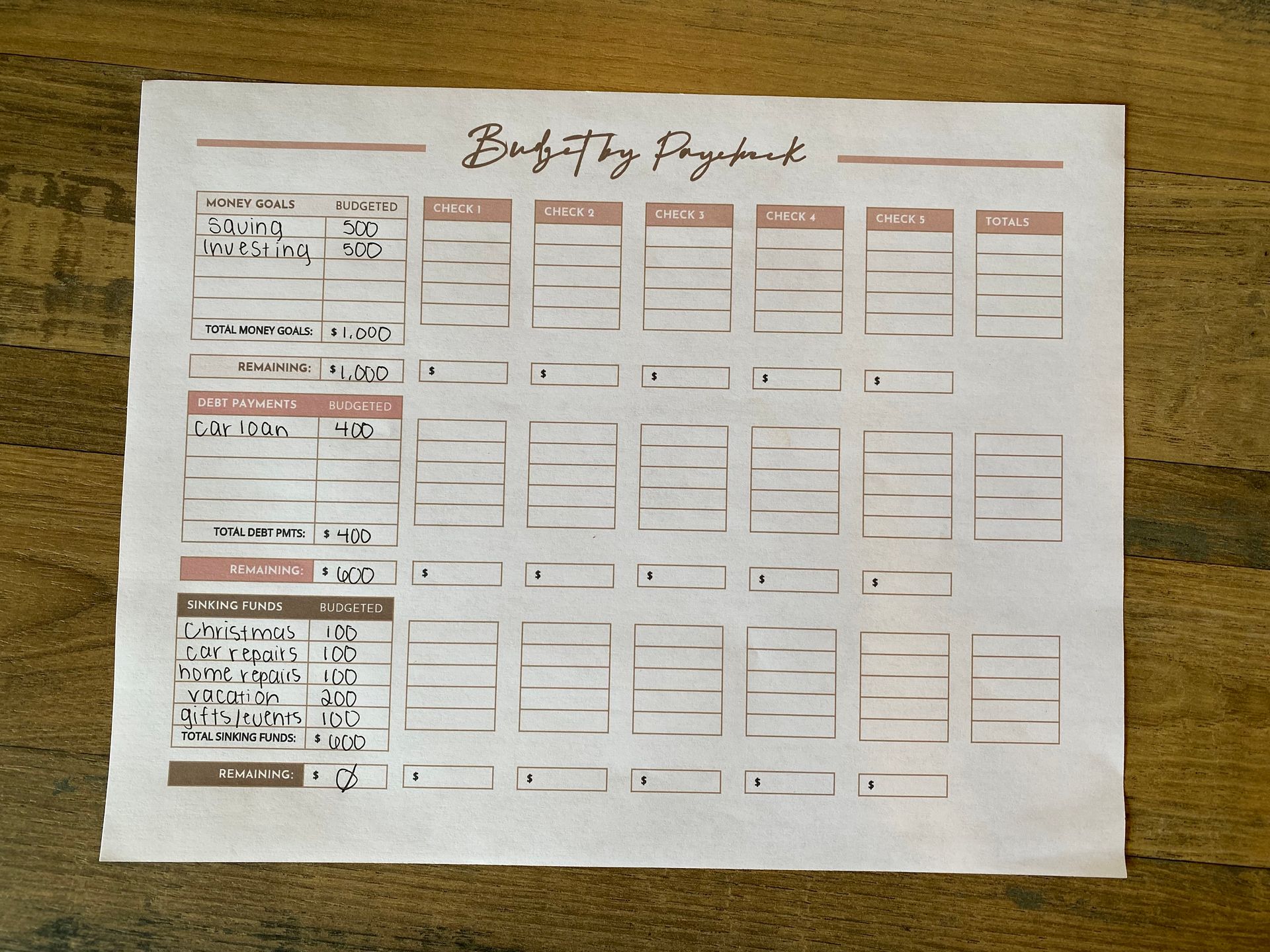
Learn how to budget biweekly paychecks on one income with a simple system that helps overwhelmed moms manage two paychecks a month with confidence.
Struggling to make one income stretch? This step-by-step paycheck budget method helps families stop living paycheck to paycheck and finally feel in control.

These budget notebook ideas will inspire your creativity and help you organize and reach your financial goals! Here's what you need in your budget binder to take control of your personal finances.
Organize your personal finances by utilizing a budget calendar- lay out your paychecks, bills, social events, etc., so you know exactly what you need to budget for in the month ahead!

Whether you have credit card debt, student loans, a car loan, or mortgage debt, use these debt free coloring pages as your debt payoff tracker; keeping you focused and motivated to become debt free!

The ultimate guide to creating a successful family budget. If you're sick of financial stress and feeling squeezed at the end of every month, start budget planning and taking control of your personal finances.
Get my free financial goals worksheet to set and effortlessly track all your savings goals! Financial goals examples including short-term goals and long-term goals to create a well-rounded financial plan that works for you!